Thursday, January 31, 2019

Unforgettable (Musings on the CBC's Unspeakable about Canada's 'tainted blood scandal')

Updated: 9 Feb. 2019 (New videos,comments +at blog's end)

January's blog was stimulated by two ongoing current events: UK's Infected Blood Inquiry and Unspeakable, a television series based on Canada's 'tainted blood scandal.' The blog's purpose is to provide those interested with a range of selective (not all inclusive) resources in one place. (Further Reading). 

The blog's title derives from a song recorded by Nat King Cole in 1951. Surely, these blood scandals must stay unforgettable forever. But in Canada a recent survey showed 61% of Canadians were unaware of the Krever Inquiry and the Canadian 'tainted blood' tragedy of the 1980s and '90s that led to establishing a new blood system.

Unspeakable has caused a bit of a stir. For example, the series resulted in Graham Sher, CEO of Canadian Blood Services, writing this oped:
As someone who lived the scandal and its antecedents while working in Canada's blood system, I know all the real-life physicians in Unspeakable. Also read the three volumes of the Krever Report, all of which gives me an advantage in following the series.

Also knew hemophilia patients Barry and Ed Kubin (teenagers at the time) when working for Canadian Red Cross Blood Transfusion Services in Winnipeg in the 1960s and '70s. They'd come to the blood service to pick up cryoprecipitate and later the Factor VIII concentrate that was to kill them. Ed died from AIDS in 1996, his younger brother Barry before that. Human interest news feature:
Some of the characters in the TV series are fictionalized. I'm guessing that the bigger-than-life character in episode 4 (29 Jan. 2019), a hemophiliac from Manitoba, who carries a rifle around, is a take-off on Ed Kubin.

I may add to the blog as the series progresses. Hope you find the resources below useful.

FOR FUN
Believing these blood scandals must stay unforgettable forever, I chose this oldie-goldie.
  • Unforgettable (Natalie Cole with video recording of her late father Nat King Cole)
As always comments are most welcome. See those below in Comments section and this one in the text of the blog.

ADDENDUM - REPLY to Dr. Neil Blumberg (8 Feb. 2019)
...Must admit it's a complicated business and at my advanced age I'm trying to stick to the BIG PIC. Easy to get wrapped up in the trees and forget the forest. First I'll deal with HCV, then HIV and FVIII concentrate/ cryoprecipitate. Appreciate Neil taking the time to present alternative views to mine. Hope readers appreciate his contributions to the ongoing discussion. 

There is no doubt in my mind that Justice Horace Krever got it right in his extensive 'Royal Commission of Inquiry on the Blood System in Canada' (1993-7), culminating in the Krever Report, 26 Nov. 1997, after which Canada got a new blood system (CBS and Héma-Québec).

Open Letter to the Honourable Commissioner Judge Horace Krever (retired) by CBS CEO Graham Sher (23 Nov. 2017):
"Sadly, an entire generation is largely unaware of the extent to which the system failed, and perhaps more significantly, why and how it has been rebuilt. In a recent poll conducted by Ipsos on our behalf, fewer than half of Canadian respondents indicated some level of awareness of the Krever Inquiry and its findings."
1. NON-A, NON-B HEPATITIS (HEPATITIS C)

The gift of death: Confronting Canada's tainted-blood tragedy
Source: Canadian Encycopedia (Time Line)

1981:Canadian Red Cross rejects "surrogate" tests (meaning testing not for a condition itself but for indicators generally associated with it) being developed for non-A, non-B hepatitis in blood. It cites controversy over their reliability and the lack of Canadian data, but no Canadian studies are undertaken.

1985:Canadian Red Cross starts screening blood for HIV, the AIDS virus.

1986:U.S. blood banking organizations start surrogate testing for non-A, non-B hepatitis based on research indicating it can drastically reduce the incidence of transfusion transmission. Canadian Red Cross remains unconvinced, estimating surrogate testing would prevent only a small number of cases, at a cost of up to $20 million in the first year.

1990: Canadian Red Cross (and U.S. organizations) start direct screening for hepatitis C virus. But unscreened plasma in blood products still reaches some patients, possibly for as long as two years.

1993: Federal government appoints Ontario appellate court Justice Horace Krever to investigate the contamination of the public blood supply in the 1980s.

Nov. 21, 1997: Krever releases his report, slamming the Red Cross and governments for ignoring warnings and acting irresponsibly as HIV and hepatitis C transmissions continued. He calls for prompt no-fault compensation for "all blood-injured persons." Krever concludes that 85 per cent of the approximately 28,600 hepatitis C infections from the blood supply from 1986 to 1990 could have been avoided.

Feb. 12, 1998: The RCMP launches a criminal investigation into the tainted blood scandal.

March 27,1998: Federal Health Minister Allan Rock and his provincial counterparts announce a [HCV] compensation package of $1.1 billion ($800 million from Ottawa, $300 million from the provinces), available only to those infected between 1986 and 1990, when screening could have been in place. Details of individuals' compensation are still to be worked out.

From 'Blood officials knew in '81 of hep-C [surrogate] test, memos show' (12 Nov. 2003) by André Picard, author of 'The gift of death: Confronting Canada's tainted-blood tragedy' (1985) 
  • ...Much of the discussion focused on using a surrogate, or indirect, test for alanine amino tranferase. ALT is a blood enzyme that indicates liver dysfunction, a telltale sign of hepatitis infection.
  • The test was far from perfect. It would detect only about half the cases of HCV, resulting in the loss of about 3 per cent of blood donations, and would cost about $3 per unit of blood. But HCV was becoming such a widespread problem that the meeting concluded: "Blood-collection agencies in the U.S. should prepare to test ALT levels of all blood units."
  • John Derrick, director of operational research at the Canadian Red Cross, said testing was "premature" but blood banks in the U.S. were "gearing up" for the move. He noted that as long as the ALT test was not part of standard operating procedures, the Red Cross "can not be held legally responsible for any illness resulting from transfusion of blood with high ALT levels."
  • Dr. Derrick concluded the memo by saying there was a "general strong feeling . . . that no one should test on a routine basis since all blood centres would be obligated to test." 
  • In May, 1981, Dr. Patrick Moore, director of the National Reference Laboratory of the Canadian Red Cross and one of the country's foremost experts on hepatitis, had demanded immediate implementation of surrogate testing. But his recommendation was rejected by his superiors, largely for financial reasons. They decided instead to do more testing.' 
It took the USA a long time to implement surrogate tests (ALT, anti-HBc) because of the balance between risk and benefit (Harvey Alter) and Canada never did.
Perfect example of the precautionary principle abandoned and it's not so much that transfusion physicians in the 1970s-80s were such staunch proponents of evidence-based medicine, although some were, because I must have missed that. EBM existed before but got huge impetus from McMaster University in Canada about 1992.
The precautionary principle applies where after assessing available scientific information, reasonable grounds for concern exist for the possibility of adverse effects on human health [or the environment], yet uncertainty persists. Risk management measures can be adopted, without having to wait until the reality and seriousness of adverse effects become fully known. In other words, in risk management, err on the side of human safety.
Based on the evidence of the Krever Inquiry, in Canada and perhaps elsewhere, the over-riding principle was minimizing costs at the expense of human lives. Yes, the transfusion medicine community were dealing with many unknowns about non-A, non-B hepatitis (hepatitis C), its incidence, cause and seriousness, but Canadian leaders and funders opted (conscious decision) to do nil about hepatitis C despite calls from many inside the system. 

Who knows how many of the estimated 20,000 cases of hepatitis C (1985-90) could have been saved by surrogate testing of the Canada's blood supply and those infected by blood before 1985. 

2. HIV and AIDS
Will try to keep this reply shorter. In reply to my comment, "But why not cryoprecipitate made from one donor not 20K+ as for FVIII concentrate?" Neil Blumberg commented, "The capacity to generate cryoprecipitate was nowhere near what it needed to be to replace all the factor VIII concentrate that was in use. Would have required a year or two (my guess) to ramp up production."

I've only a sketchy idea of what increased cryoprecipitate production would have taken in Canada. Based on my 13 years as a medical lab technologist at Canadian Red Cross BTS in Winnipeg (combined blood supplier and regional transfusion service) for Manitoba and northwestern Ontario, maybe more large refrigerated centrifuges to separate plasma from red cells, a few more blood component staff? What I don't know is what percentage of donated blood was typically processed into cryoprecipitate.

First, did CRC-BTS even try to ramp up cryo production, given it had decided to distribute its already paid-for stockpile of known HIV-infected, non-heat-treated FVIII concentrate? I think not.
Kinda reminds me of CBS's decision to close a plasma collection site because it was cheaper to buy plasma derivatives like intravenous immune globulin (IVIG) from USA. CBS has since decided that securing a Canadian supply chain for donated plasma is a good thing but to date no government funding has been announced.  
Second, some CRC-BTS centres and medical directors in Canada decided to distributed more safe heat-treated FVIII conc. and fewer HIV-infected products and also promoted cryoprecipitate, as did some hematologists, versus giving HIV-infected stockpiles to patients. To my knowledge there were no hemophiliac bleeding disasters in cities like Calgary, Edmonton, St. John's, who did so.

BOTTOM LINES [BIG PIC]
Was there a shortage of heat-treated FVIII concentrate so that hemophiliac lives could only be saved by using up stockpiles of HIV-infected concentrates, else they'd bleed to death, and most were judged as already infected?
Based on Krever, it's an open question in Canada and a bit ironic, given the product meant to save hemophiliacs killed them. I've read evidence there was no shortage of heat-treated concentrate but don't know the reality. Also, CRC-BTS made no effort to increase production of safer (one-donor) cryoprecipitate. 
Was Canada deciding not to implement surrogate tests -against the views of some of its own medical experts- justified and honorable? No. Krever presented evidence to show decision was based on limiting costs not patient safety.

Agree with Neil that hindsight is 20-20 and real time is much fuzzier. And that folks, especially victims whose lives have been destroyed, naturally play the blame game because it's hard to accept, 'Oh well, sometimes bad things just happen.'

However, I do not agree that the worldwide 'tainted blood tragedy' of the 1980s-90s was unavoidable. Instead, I agree with Justice Krever. The tragedy's effects in Canada (perhaps elsewhere) could have been significantly decreased if transfusion leaders had not been so arrogant (yes, many were arrogant in thinking, as physicians in that era often did, we know best and some still do) and focused on the value of human lives, not the bottom line (cost-savings).

One last tidbit: In the past I read that minutes of a key meeting of Canada's government funders and CRC-BTS officials were inexplicably destroyed. Cannot get the reference now but it's real and did happen. Remind you of anything, e.g., missing minutes of a Nixon Watergate tape?

That's it for this oldster. Over and out.

RELATED BACKGROUND VIDEOS
FURTHER READING
CANADA
For followers of the CBC's Unspeakable, I recommend these resources:
Twitter:
Victims outraged by tainted blood trial acquittals (1 Oct. 2007)

Hepatitis C Package Controversy (The Canadian Encyclopedia, 2003, updated 2014)

André Picard tweets about Unspeakable, based in part on his book "The Gift of Death", shares some of his stories on 'tainted blood' scandal

Krever Report: Some Important Milestones: HIV and AIDS,1981-94 pp.xxi -xxviii

Krever Report: 14. The risk in Factor VIII concentrates

Capan K. There's more to Krever's report than the blood issue -- much more. CMAJ 1998;158:92-4.
  • See 'Therapeutic privilege' for lawsuit filed by Rochelle Pittman infected with HIV from husband, who got it from infected transfusion and was never told.
A systemic deconstruction of the Canadian tainted blood tragedy (Gilles Paquet and Roger Perrault. Oct. 27, 2015)
UK
For followers of the UK's Infected Blood Inquiry I recommend these resources:
Twitter

Monday, December 31, 2018

Those were the days (Musings on physicians I've worked with over a lifetime)

Significant updates: 12 Feb. 2022 (See #3 below:In memoriam:Dr. David Ferguson)
December's blog is about eight pathologists, hematopathologists and hematologists, I've had the pleasure to work with over a more than 50-year transfusion career. I cannot do them justice so will offer a series of brief tidbits that symbolize how I see them. Some are what folks call 'real characters,' some not, but they all have strength of character and I'll never forget any of them.

1. John Bowman (Winnipeg, Manitoba)
I've blogged on Jack before when he died in 2005:
Dr. Jack Bowman (In Memoriam)
Many tidbits to show why I respected him.

The rest are from my career in Edmonton, Alberta, Canada.

2. Lynn K. Boshkov (Edmonton)
Lynn is such an unassuming person. Loved her tenure at the UAH transfusion service. She was the Medical Director when this case happened
So respected her when she disclosed and explained what had happened to the patient's family whose loved one had died and supported the staff member involved. Lynn eventually moved to Portland's Oregon Health and Science University.

3. David Ferguson (Edmonton)
As UAH Medical Director David helped me a lot as the clinical instructor to the UAH transfusion service. He eventually moved to BC and later retired. Two tidbits:

The Med Director gave oral exams to all med lab technologist doing their clinical rotation at UAH and I was present to decrease any stress. Once David asked a student which lectin acted like anti-A1. Her reply was Delicious biflorus (not Dolichos biflorus) at which point he started laughing uncontrollably. Poor kid, I tried to salvage the moment, though I had a huge grin on my face.

Second tidbit is David's reaction to feedback we got on a paper submitted to AABB's Transfusion.

Letendre PL, Williams MA, Ferguson DJ. Comparison of a commercial hexadimethrine bromide method and low-ionic-strength solution for antibody detection with special reference to anti-K. Transfusion 1987 Mar-Apr;27(2):138-41.

AABB reviewers thought we needed to change title to add 'with special reference to anti-K'. We did, of course, but I'll never forget David's venting as only he could do. In retrospect I wish all could see him as I did.

In Memoriam - David Ferguson: Recently learned of that David died on January 3, 2022.He'll be sadly missed by all of Canada's transfusion medicine community.

4. Ed Uthman (MEDLAB-L)
When I created the mailing list MEDLAB-L in 1994, Ed was one of the first to subscribe. He soon became a rockstar and motivated many to love the list and join. He contributed many posts and made the list a success.

Now on Twitter Ed still contributes to pathology worldwide: Ed on Twitter

5. Neil Blumberg (MEDLAB-L)
Neil also joined MEDLAB-L early on and was so generous with answering questions completely and in detail. The wealth of knowledge he has is incredible and that he's so willing to take time to share it with others.Wow!
I'll always treasure Neil's contributions and he's still at it: Neil on twitter
6. Ira Shulman (MEDLAB-L)
Ira gave talk at Edmonton conference and I got to know him. Came to my University of Alberta Med Lab Sci office to catch up on e-mail. I erred in ordering wine that was sweet at a local restaurant (horrors!) and especially funny as I prefer very dry wine. We went to the local IMAX theatre as he wasn't into a river valley walk. 


Great guy. Loved California Blood Bank Society (CBBS e-network forum) but it ended.

Once he asked me to present at AABB conference with him, but without financial support as a consultant I couldn't, especially given the US-Canada exchange rate. At ISBT World Congress in Vancouver I enjoyed his OMG comment on all the backup files I had for my Powerpoint presentation.

6. Heather Hume (Ottawa, CBS Head Office)
I worked on contract for CBS under Heather's supervision, along with colleague and friend Kathy Chambers, when Heather was executive medical director, and had the vision that CBS should do more transfusion education. Heather is special.

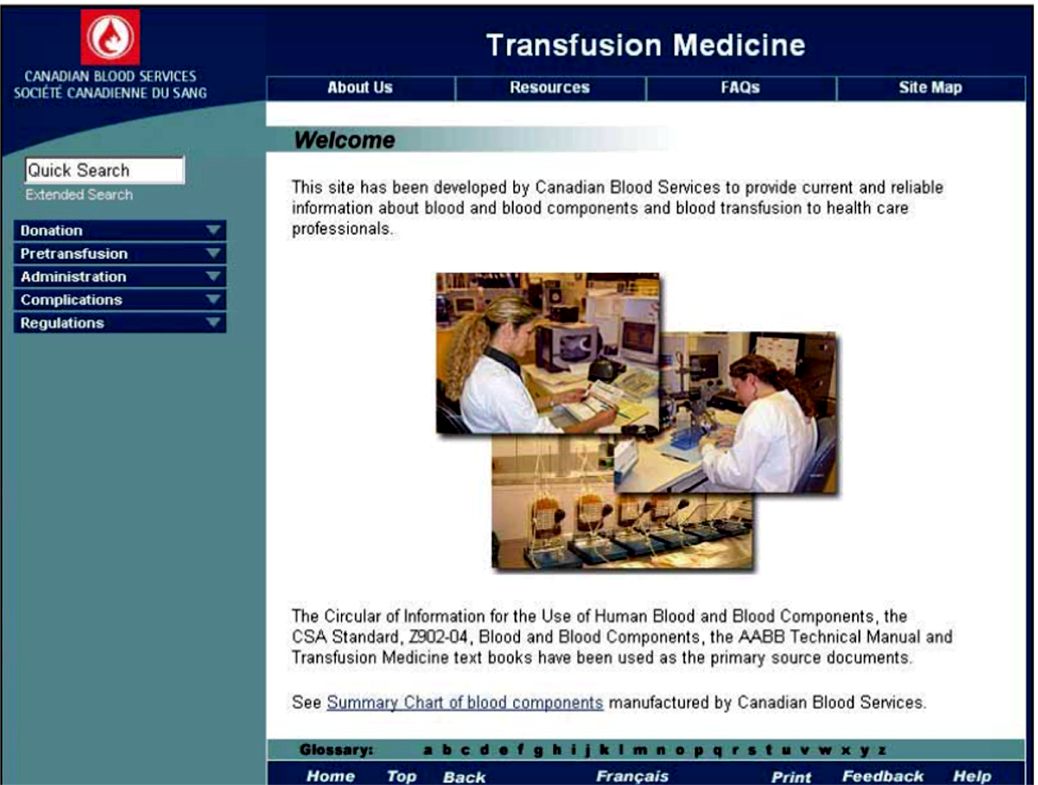
Together, with input from Dr. Lucinda Whitman, we created a Transfusion Medicine website [screen shot of old site] that has since transmogrified to Professional Education.

At Vancouver at ISBT 2002 Congress when, as a panel member, I noted I'd stayed at University of Alberta Med Lab Sci for 22 years but managed only 9 months at CBS Edmonton as 'Assman,' Heather quipped,~ to 'Pat always wants to end with a laugh.' I'm sure she was thinking much worse, but the classy lady gave me the benefit of the doubt.

7. Gwen Clarke (Edmonton)
I taught Gwen when she was in Med Lab Sci and got to know her better after she became a hematopathologist. In 2006 Gwen and Morris Blajchman edited Clinical Guide to Transfusion, the first to be published online and in print. Believe it or not, I was a co-author (minuscule role) of one of its chapters:
2006 Chamber K, Letendre P, Whitman L. Blood Components. In: Clinical Guide to Transfusion, Clarke G, Blajchman M, eds. Ottawa: Canadian Blood Services, 2006.
Every technologist who works with Gwen respects her. She's a oner. I hope CBS knows how lucky they are to have her on staff.

 8. Susan Nahirniak
I count Susan as one of my Med Lab Sci 'kids'. Despite all my kooky blogs and tweets, Susan never fails to greet me with a warm smile, as here at MLS 2018 reunion. I so appreciate that she forgives me my sins for old time's sake. During our talk her phone kept vibrating because her daughter wanted to be picked up, but Susan kindly ignored the phone.

In summary, I hope you enjoyed these glimpses into encounters I've had with a variety of transfusion physicians over the decades. All are very different, unique, and superb representatives of their profession.

TWEETS
Replies I received on Twitter when I posted this blog. Both have given me permission to post their tweets.
#1 By @shroon7, 1 Jan. 2019
I adored Dr. Boshkov and was @UBB [University of Alberta Blood Bank] as an LAII when she left. Dr. Clarke is also wonderful and I’m glad I still get to talk to her occasionally when she’s on call. RBB’s [Royal Alexandra blood bank] loss was CBS’s gain.Dr. N [Nahirniak] is another fave; more than a few times I’ve been very glad it was her on call. #2 By @shroon7, 1 Jan. 2019
She [Lynn Boshkov] was just so wonderfully “chill” in bone marrows. She had the best ability to keep patients distracted and at-ease during the whole procedure.
#3 By @shroon7,  1 Jan. 2019
To sum up: Considering THREE fabulous hemepaths I’ve had the good fortune to work with are three of your top choices after your long career, I’d consider myself very blessed.

#1 By @DoctorCanBob, 1 Jan. 2019
Lynn was trained in McMaster and was also a superb "clotter".
#2 By @DoctorCanBob, 1 Jan. 2019
Lynn is still doing primarily clotting in Portland at OSMU. 

Also see entire thread of these tweets.

FOR FUN
Could choose many songs for this blog but decided on 'Those Were The Days' by Mary Hopkin. Her 1968 version, produced by Paul McCartney, became a number one hit in UK.
As always, feedback is appreciated. See Comments below.

Wednesday, November 14, 2018

Nessun dorma (Musings on anti-paid plasma blogs over the years)

Updated: 14 Nov. 2018

Below is a list of the blogs I've written so far on paid plasma: 23 blogs over 6 years as of 14 Nov. 2018. Some blogs focus on it entirely, others touch upon it along with related issues. In total 2004-2018 I've written 174 blogs, and paid plasma constitute about 13% of them. This blog's sequence is different than others. The main content (list of earlier blogs) will come at the end.

INTRODUCTION
The blog's title comes from a famous aria for tenors in Puccini's opera Turandot, which premiered at La Scala in Milan in 1926 after Puccini's death. Like many, I love the classic for many reasons. One is my spouse and I heard Pavarotti sing it in person in Edmonton in 1995. The face of every person on the LRT ride home from the concert radiated with joy.

I chose Nessun Dorma for several reasons. The title and first lines translate as 'None shall sleep' and builds to the final, victorious cry of 'Vincero!' (I will win!). In the battle over paid plasma in Canada, and it is a battle, I'm against paid plasma, as explained in the 23 blogs below. We don't know who will win and what the win will look like.

I hope the eventual winners (Vincero!) will be
  • Patients who need plasma derivatives and are prescribed products like intravenous immune globulin (IVIG) for evidence-based reasons, not because Big Pharma promotes it relentlessly to physicians. VERSUS patients being scared into panic by BIG Pharma, which supports their associations financially and is not beyond creating fear the world will end if paid plasma clinics cease to grow exponentially. 
  • Blood donors in financial need, who will no longer be exploited at the risk of their health by Big Pharma, which makes $billions off their body tissue. Yes, not all see themselves as being exploited, but many, if not all, are exploited and it's unethical.
  • Volunteer blood donor sector, which will recruit and be able to retain young donors, instead of having them slowly siphoned off to paid plasma, from which they are unlikely to return as they age.
  • Canada's blood supplier CBS (outside Quebec), which can concentrate on ways to encourage more volunteer young donors, perhaps with token incentives as happens in the USA system, or maybe not. Hope that CBS gets funding to open plasma collection clinics to get Canada closer to meeting its plasma needs.
  • Canada's government funders of the blood system, which should fund CBS plasma clinics, encourage voluntary donation, VERSUS now needing to spend megabucks to regulate ('police') the use of IVIG due its ever-increasing usage, as done by the BC PBCO and others, including for primary immunodeficiency. 
  • Health Canada should do its duty to regulate blood safety as a win-win strategy for patients and blood donors, VERSUS encouraging Big Pharma to promote endless iffy uses of plasma derivatives by supporting its exploitative paid plasma growth in Canada. 
FOR FUN
PAST PAID PLASMA BLOGS (n=23)
2018
The sound of silence (More musings on paid plasma pros and cons) 
The Boxer (Musings on HC's Expert Panel Report on immune globulin and paid plasma)
2017
Look what they done to my song (Musings on how paid plasma mirrors Rumpelstiltskin) 
Always on my mind (Musings on lack of transparency in Canada's blood system) 
The Sound of Silence (Musings on Health Canada's Expert Panel on Immune Globulin Product Supply) 
While my guitar gently weeps (Musings on recent transfusion-related news) 
We are the world (Musings on the humanitarianism of selling body tissues) 
The Boxer (Musings on lies & jests in the blood industry)
2016
Simply the best (Musings on paid plasma  and TM colleagues I've know) 
Sweet Dreams (Musings on a recent transfusion-related nightmare) 
Heart of Gold (Musings on donating the gift of life)
2015
Heart of Gold (Musings on sucking $ from body tissues)
2014
Don't worry, be happy (Musings on the safety of our blood supply) 
If you could read my mind (Musings on hard-to-believe TM news) 
C'est si bon (Musings on TM news that is so good and not so good) 
Hey Jude (Musings on why paid plasma makes it worse, not better) 
I heard it through the grapevine (Musings on paid plasma's PR campaign) 
Bridge over troubled water (Musings on what to be thankful for as TM professionals)
2013
Day tripper (Musings on HC's instructions to the jury on paid plasma) 
Heart of Gold (Musings on pimping for paid plasma) 
Stop children, what's that sound (Musings on commercialization of our blood supply) 
We are the world (More musings on commercialization of the blood supply) 
Still my guitar gently weeps (Yet more musings on commercialization of our blood supply)

Sunday, October 28, 2018

I will remember you (Musings on all those who died in tainted blood tragedies)

Updated: 5 Nov. 2018 
Canada's blood scandal, Further Reading
Responses to a Comments

Haven't written a blog for awhile and this one will be short. For October I'll  briefly comment on the ongoing attack on national blood suppliers like Canadian Blood Services and many others by gay activists. In Canada the designation is lesbian, gay, bisexual, transgender, queer, and two-spirit (LGBTQ2).

The blog was stimulated by two items at the AABB 2018 and the current UK Infected Blood Inquiry (Further Reading), both featured in TraQ's October newsletter under General and UK, respectively.

Recently, I've seen many attacks on Twitter accusing  CBS of discrimination. Almost all activists claim there never was a reason to ban or defer male homosexuals. When I've defended CBS by reporting the history of transfusion-associated HIV transmission in Canada, the blood supplier's perspective and its ongoing research, I've often been accused of being homophobic. Quite scary for an oldster but it won't ever stop me from voicing my opinions on controversial issues.

My take is that gays have suffered horrific discrimination over the years and many cannot differentiate blood supplier caution from larger societal historical wrongs. And most are too young to appreciate blood supplier's perspective and the need for nation-specific evidence-based policies. Suspect I'm being too generous here but won't elaborate. What the hell, I will. Could be dead wrong but sometimes when you've been unfairly repeatedly victimized, you see oppressors everywhere.

The blog's title derives from a 1995 song by Canadian Sarah McLachlan.

BACKGROUND
Activists worldwide see even a temporary ban of men who have sex with men (MSM) as discriminatory. Over the years in Canada the deferral has gone from permanent deferral to a 5 year deferral without MSM to a one year deferral without MSM and likely will soon become a 3 month deferral without MSM.

Gays see any deferral, no matter how short, as a holdover from an era of panic over AIDS in the early 1980s (Further Reading, NBC):
"They are just the latest chapter in a narrative that casts gay men as untrustworthy, promiscuous vectors of disease. We know scientifically we pose no greater threat than anyone else, but fear is a really powerful thing — especially fear of HIV."
I'll provide only this one news item but also see Google search for "gay blood donation discriminatory" in Further Reading, which yields 5,630,000 hits.

In Canada, Prime Minister Justin Trudeau was foolish to promise a change in CBS's MSM policy because it's not a political decision, it's science-based. Sadly, his error fueled much of the outrage by the gay community against CBS. The last thing our blood system needs is a political-based decision. We've been there, done that at the beginning of Canada's HIV/AIDS 'tainted blood scandal'.

BOTTOM LINE: As lifelong worker in transfusion as front-line medical laboratory technologist/scientist, supervisor-manager, educator, and consultant (54 yrs - Yikes!)  I've experienced the best of times and the worst of times. I firmly believe our blood supplier CBS is right to be cautious and base blood safety policies on evidence gathered in Canada (CBS MSM deferral policies, Further Reading).

As always, comments are most welcome. Please see the 4 comments below and my response to one (added Nov. 1, 2018).

ADDED Nov.1, 2018
Please see comments below. My reply to Shanta is as follows:

About your first point: If my comment that victimized LGBTQ2 see oppressors everywhere is true, it is probably because homophobia IS everywhere and doesn't magically stop at the front door of institutions because they reflect the values of the society that created them.

I'll grant that homophobia still exists everywhere in society, including in Canada as opposed to nations in which homosexuality is criminalised, including some nations where the death penalty applies. Source: Gay relationships are still criminalised in 72 countries, report finds. (The Guardian, 2017)

But I see it as more nuanced. Having worked for its predecessor Canadian Red Cross for 13 years, and for CBS over many years, mainly as a consultant with a brief stint as 'assman' managing CBS Edmonton's patient services laboratory, I do not believe Canadian Blood Services is a homophobic institution. I don't think CBS institutionalized policies of homophobia, including the ever decreasing ban on gay MSM donations. Individuals within any organization may be homophobic but I don't think there's evidence CBS per se is. Reasonable people can disagree on this point and I'll give my reasons below.

Shanta's second point relates to evidence-based policy-making. If the CBS MSM policy is purely based on evidence, we should be able to correlate each change over 30 years -- from permanent to 5-year to 1-year to the now anticipated 3-month deferral without MSM -- to the evidence that triggered each decision. If we can't do that, it's possible to conclude that policy-makers are influenced by more than just the evidence.

My view is that evidence-based policy-making on HIV and MSM is complex and affected by many factors including risk-modelling research, which is way above my pay grade (comprehension). For the record like many countries Canada moved from an indefinite deferral for any MSM to a five-year deferral in 2013, and to a 12-month deferral in 2016. Source: HIV donor testing. I believe the initial permanent deferral was justified and I've been labelled a homophobe on Twitter for it by  gay activists.

To be clear, national blood suppliers need to take into account many variables, including national HIV rates, data accumulated over many years because of the low prevalence of HIV, and the need to be cautious because of the incredible screw-ups that cost thousands of lives in what Canada refers to as the 'tainted blood tragedy,' the biggest PREVENTABLE public health disaster in our history.

CBS recognizes that 'MSM deferral is one of the most controversial deferral policies, and while blood safety remains paramount, issues of social justice and inclusivity highlight the need for its modernization.' See Developing more inclusive deferral policies for blood and plasma donors,

To Shanta's point, it's impossible for CBS to present clear cut evidence for each decision to decrease the deferral without MSM. The variables are too numerous. My view is that, yes, 'policy-makers are influenced by more than just the evidence.' But the elephant in the room is NOT homophobic discrimination, it's CBS's desire to err on the side of safety and caution to prevent a massive catastrophe of the 1980s (HIV) and 1990s (HCV) which resulted in Canada's blood supplier Canadian Red Cross Blood Transfusion Service being axed.

And let's face it, the emphasis on evidence-based medicine is relatively new.  Example: Choosing Wisely Canada launched on April 2, 2014.

FOR FUN
I chose a song by Canadian Sarah McLachlan to honour all those thousands who died and suffered from infected blood tragedies worldwide. Having lived through it in 1980s and 1990s I can never forget them. In early days of my career, I knew folks with hemophilia who came to blood centre to pick up their cryoprecipitate, then FVIII concentrate that killed so many. Two were Barry and Ed Kubin mentioned in Vic Parsons' book below.
FURTHER READING
It's still a ban': Gay blood deferrals still discriminatory, LGBTQ advocates say (NBC, 29 Nov. 2017)

Google search: "gay blood donation discriminatory"

AABB 2018
CBS on MSM Deferral Policies
Canada's Blood Scandal
UK Infected Blood Inquiry: October 2018 News

Wednesday, August 29, 2018

Take a chance on me (Musings on PROMs and PCOs)

Updated: 30 Aug. 2018
August's blog derives from a scientific paper by authors in Ottawa, Canada (Further Reading) that I added to TraQ and tweeted about.
Staibano P, Perelman I, Lombardi J, Davis A, Tinmouth A, Carrier M, Stevenson C, Saidenberg E. Patient-centered outcomes in the management of anemia: a scoping review. Transfus Med Rev. 2018 Jul 12. pii: S0887-7963(18)30051-8. [Epub ahead of print]
First, out of curiosity I wondered about the meaning of 'scoping review', something I wasn't familiar with.

Second, patient-reported outcome measures (PROMs) used to evaluate the quality of patient-centered outcomes (PCO) struck home in my personal life. According, I obtained the full article to read. Then, when one of the authors on Twitter asked me for an opinion, I replied as follows.

What follows are the key points I took from the paper according to my own interests and career as a medical laboratory science educator who taught critical analysis of scientific literature for years.

This blog concentrates on only three features of the paper. I didn't include Methods and Results for the sake of brevity and to keep the blog more accessible to readers. Obviously, they are key to the paper.
  • Scoping review (What's it all about?) 
  • PROMs and PCOs (Research often omits all mention of them)
  • Discussion (Great model for authors of research papers)
Don't expect an expert analysis because I'm unqualified to get into the review's nitty-gritty. What I present are generalizations within my personal and professional experience.

The blog's title derives from a 1978 ditty by Sweden's ABBA.

SCOPING REVIEW
After reading several resources (Further Reading) on 'scoping review' I'm not all the wiser but see it as follows:
  • Relatively new approach; 
  • Purpose is to map the literature on a topic vs a systematic review designed to summarize the best available research on a specific question;
  • Scoping is broad, systematic is narrow.
If anyone can enlighten me further, please do so via Comments below.

PROMs and PCOs 
This is where it gets personal. Patient-reported outcome measures (PROMs) are used to evaluate the quality of patient-centered outcomes (PCOs - Further Reading). Both are usually absent in medical research on various treatments.

In this scoping review the most common PROM tools were Functional Assessment of Cancer Therapy (FACT) and Functional Assessment
of Chronic Illness Therapy (FACIT) scales (46.9% of studies).
See examples of PROMs in Further Reading. Headings typically include these types of well-being:
  • Physical
  • Social/Family
  • Emotional
  • Functional
The authors explain the concepts as follows:
'Patient-centered outcomes (PCOs) measure the impact of disease and treatment on a patient’s physical, social, and mental well-being.Tools used to measure such outcomes are known as patient-reported outcome measures (PROMs).'
'PROMs are necessary for understanding the holistic burden of various disorders from the patient perspective and for improving patient-physician communication, patient satisfaction, and treatment outcomes'
Five years ago my spouse was diagnosed with an incurable disease, idiopathic pulmonary fibrosis (IPF), with an average life span from diagnosis of  3-4 years, although some patients live much longer. At first the Alberta government did not cover the one drug that supposedly could help (Esbriet or pirfenidone). But later after more CADTH research gave it the okay, Alberta did fund the drug under certain disease conditions (at a cost of ~$43,000/yr). The studies that showed pirfenidone was useful were based on extenuating life, the so-called survival benefit.

In my opinion, pirfenidone's many side effects (See blogs in Further Reading) were downplayed in research articles and manufacturer's literature, saying they could be managed by lessening the dose. Perhaps for many but not in spouse's case, and who knows how many others.

Patient-reported outcome measures used to evaluate the quality of patient-centered outcomes related to the patient's physical, social, emotional, and functional well being were slim and mainly physical side effects. In reporting side effects outcomes were chosen that were mostly clear cut such as rash, sun-sensitivity, nausea, and of course, whether patients survived longer on the drug, the key.

As a result of my spouse's experience, if ever requiring treatment for a life-threatening condition, I hope health professionals will ask me for PROMs. I'm best qualified to assess my overall quality of life and well-being and would want those factors to be considered alongside how much my life and functionality were extended by the treatment.

DISCUSSION
I appreciated the paper's discussion for several reasons, especially how the authors extensively discuss limitations, some of which are presented below. This section could be used as a model for students learning how to evaluate literature. How the authors analysed the review's results follows.

Generalizability
Because the review analysed PCOs and anemia in mainly adult oncology patients (less than one-tenth evaluated pediatric or older adult
populations), authors note the limited generalizability of findings to those patients.

Bias
Although more than half of the included studies were RCTs,approximately 45% of these were open-label* and susceptible to patient allocation biases and biases related to the inherent subjectivity of PROMs (self-reported patient replies to survey questions).
*Open label clinical trials do not attempt to disguise the drug/treatment, meaning that no standard treatment or placebo is utilized. This can lead to bias, as both patients and physicians are aware of which groups are receiving which treatment. 
Transfusion
More than 75% of included studies investigated PCOs in anemic patients treated with erythropoiesis-stimulating agents (ESAs), whereas only 3.8% evaluated PCOs in studies of transfusions to treat anemia. The authors write,
 'As blood transfusions are one of the most common medical procedures in hospitals, are known to carry risk, and also use a limited resource, the lack of studies assessing how transfusion affects patient quality of life remains a troubling discrepancy.' 
I'm tempted to say, "It's the transfusions, stupid" as in the 1992 USA presidential race, where strategist James Carville ('the ragin' cajun') used  'It’s the economy, stupid' to focus the minds of Clinton's campaign workers.

Study Outcomes
Published studies evaluating ESAs to treat anemia, regardless of etiology, have nearly all had change in hemoglobin levels as the primary study outcome. Those related to the appropriate threshold at which to administer transfusion nearly always have mortality as the primary outcome.

To assess treatments for anemia or any condition, having a standardized set of core outcomes would help.

Bottom Line
My view: Using patient centered outcomes in research of any treatment for a specific condition faces many challenges. But they are essential if patient-centered care is to go beyond the cliché it often is today. Developing validated PROMs and requiring consistent and full reporting are key. Lots of work is needed to make this a reality.

FOR FUN
Could not resist choosing this ABBA song. I see it as asking medical researchers to take a chance on me and all patients. We patients should have a say in what the full outcomes of our treatment are. Plus ABBA songs are fun.
As always comments are most welcome.

FURTHER READING
Staibano P, Perelman I, Lombardi J, Davis A, Tinmouth A, Carrier M, Stevenson C, Saidenberg E. Patient-centered outcomes in the management of anemia: a scoping review. Transfus Med Rev. 2018 Jul 12. pii: S0887-7963(18)30051-8. [Epub ahead of print]

What is a scoping review?

Pham MT,et al. A scoping review of scoping reviews: advancing the approach and enhancing the consistency. Res Synth Methods. 2014 Dec; 5(4): 371-85. EPub 2014 Jul 24.

Patient-centered outcomes research from PCORI

PROMs (from Canada's CIHI)

PROM Examples
   All FACIT questionnaires
   FACT-L: For patients with lung cancer [Download pdf]

Personal Blogs
To be or not to be (Musings on IPF and Esbriet) Mar. 2016

IPF and Esbriet (Musings on extended life vs quality of life) Sept. 2016

Saturday, July 28, 2018

Everything I do, I do it for you (Musings on the UK's Bawa-Garba case)

In July's blog I offer brief comments on an item in TraQ's July newsletter. The title derives from Canadian Bryan Adams' 1991 song.

UK's Bawa-Garba case, dating to 2011 and still unresolved, has gained attention of health professionals worldwide (right click, open in new tab,for clearer graphic).
Source: What impact will the Bawa-Garba case have on community pharmacy? (Further Reading)
Source: The Bawa-Garba case, BMJ (Further Reading)

The case gives rise to so many points of discussion, including
  • Racial bigotry;
  • Culture of blame vs encouraging health professionals to report errors honestly without fear of reprisal;
  • Responsibilities of senior staff supervising junior staff;
  • Consequences of one serious error by an otherwise competent practitioner;
  • Stifling the recording of written reflections about mistakes made (tool for personal learning) because they may be used in court;
  • Facility responsibility for errors made by overworked staff in understaffed health facilities;
  • Should public perceptions trump justice and dictate harsh sentences so faith in the safety of the health care system won't be lost.
As an ex-med lab science (transfusion) educator, I'm especially interested because I was involved in case where a student error hastened a patient's death:
  • TraQ's Case A8: Severe Hemolytic Transfusion Reaction Involving a Student (Further Reading)
Also, earlier as an experienced medical technologist in a stand-alone central transfusion service separate from hospitals, and working alone on a Saturday night, I once crossmatched a pre-op patient who surprisingly typed as group AB when records showed she was group O. The SOP of always checking prior records saved that patient as another sample was drawn at the hospital, which correlated with the historical group.

But what if I had been distracted or swamped by an emergency and somehow did not do the required patient history check? A disaster (serious hemolytic transfusion reaction) might have occurred, perhaps leading to patient death, and it would be due to my error for not following standard operating procedures. Perhaps I would have been charged with gross negligence manslaughter due to not doing what a reasonably competent technologist would do?

The Bawa-Garba case offers food for thought for all health professionals.

FOR FUN
My lifetime experience is that health professionals put patient safety above all else and often sacrifice much to perform health care duties in an exemplary manner. That includes long years of study as students and, once registered, investing much personal time to keep up-to-date with the latest advances and best practices.

Could not resist using Bryan Adams' 1991 ditty, the third best selling Canadian single of all time:
FURTHER READING
What impact will the Bawa-Garba case have on community pharmacy?
The Bawa-Garba case, BMJ
Bawa-Garba news items (TraQ's 2018 July newsletter)
TraQ's Case A8: Severe Hemolytic Transfusion Reaction Involving a Student 
As always, comments are most welcome.

Friday, June 29, 2018

The Boxer (Musings on HC's Expert Panel Report on immune globulin & paid plasma)

Updated: 30 June 2018 
June's blog is about paid plasma in Canada, but don't start snoozing, it focuses solely on the Final Report of Health Canada's Expert Panel on Immune Globulin Product Supply and Related Impacts in Canada (hereafter referred to as the Expert Panel). Goodness knows how much it cost Canadian tax payers. Suspect we'll never know.

Why the blog? Well, how many Canadian transfusion professionals have read the Expert Panel Report on their own time? Maybe inside CBS they've had a staff member précis the key points as its findings are critical to the blood supplier but wouldn't happen in busy, mostly under-staffed transfusion services where Report doesn't affect operations. So, in a way, it's my gift to colleagues who may never have the time to read it and reflect.

Just happens that in a one-day lull in the FIFA World Cup of football (soccer in NA)  - I'm a footie fanatic - I finally managed to read some of the Final Report entitled Protecting Access to Immune Globulins for Canadians (pub. May 2018). Oh, and initially folks had to write to Health Canada to get a copy as it wasn't online, but now is (Further Reading).

So far I've read mainly the Executive Summary, which is the longest exec summary I've ever seen totalling 3975 words over 8 pages. Supposedly, average readers can read about 200 words/min or 2 pages/min, both of which mean average Canadians would need 15-20 mins. to read just the exec summary. Now the Expert Panel was not tasked to make recommendations and perhaps this contributed to the long summary (or not).

What follows are a few things that stood out for me in the Executive Summary, which I've finally waded through. Are these the key points? Who knows after 3975 words? BTW, I've worked in Canada's blood system as a transfusion educator for decades. Granted, my neurons are aging by the minute, but identifying the Report's key take home messages based on the exec summary was difficult. The following jumped out at me.

Why read the blog? If you care about Canada's blood system, it's a summary of what Health Canada received from its Expert Panel. If you are not Canadian, it informs on the issue of the $multi-billion paid-plasma industry [Further Reading] and why it thrives, despite being inherently unethical and preying on the poor.

Page 6 - Who uses immune globulin (IG)
Patients receiving IG can be divided into 2 major groups: those for whom the drug is life-saving and for which there is no effective alternative at this time and those whose illness can be positively impacted by the use of IG but for whom there are other therapeutic alternatives also available. There are a relatively small number of conditions and patient groups for which IG has been definitively shown to be effective and they account for the majority of use of IG.
ME: Really? No third group? Those receiving IG for 'off label' uses for which few if any evidence-based studies exist?  Is all IG issued in Canada screened to prevent inappropriate use versus the physician wants it and gets it, especially if a 'biggie'? The screen has no holes? I'm surprised.

Page 7 - Audits of who uses IG
Given the high usage of IG in Canada, a number of audits have been carried out in different provincial jurisdictions to understand patterns of utilization of this expensive product. These audits show that a significant proportion of IG use falls outside established criteria and guidelines. Other jurisdictions, particularly the UK, have achieved more success than Canada in optimizing the appropriate use of IG for patients for whom it is indicated, and as a result have a much lower per capita utilization rate.
ME: Huh? Guess there is a third group of IG users in Canada.

Page 8 - Public view of paid versus volunteer donors
One of the important dynamics impacting the future of the global plasma supply is the strong public policy position for using volunteer unpaid donors for source plasma collection and a resistance to the use of paid donors. The rationale for this position includes concerns about safety of products made from paid donors, ethical concerns about the commodification of human plasma, and concerns that compensation for donating source plasma would diminish the commitment of volunteer donors of both whole blood and apheresis platelets.
ME: This sets out the 3 main reasons why some folks are against paid plasma. The Panel emphasizes safety is not an issue, indeed it's the only thing that's bold-faced in the exec summary (p. 9). Referring to fractionation of plasma derivatives:
The outcome of these changes has been dramatic: there have been no confirmed cases of disease transmitted through PDPs in over 2 decades.
To me, a transfusion professional, that's a no-brainer. What the statement did not say is that fractionation clearly kills all currently known transfusion-transmitted infectious agents. Regardless, plasma derivatives like IG have a good safety record, are safe for the time being, and for anti-paid plasma advocates to emphasize safety is non-productive.

ETHICS is all but unmentioned by Expert Panel: What I didn't see in the exec summary was a discussion of ethical concerns about the commodification of human plasma (Further Reading:The twisted business of donating plasma).

For this readers must go to p. 71:
Moral/ethical opposition to paying for blood or plasma due to the perception that it negates the benefits of a solely voluntary-based donation system, and that it targets vulnerable populations. These organizations declared their support for the CBS initiative to collect more plasma by opening 40 new voluntary donor plasma collection sites. They also called on the Government of Canada to halt licensure of paid plasma businesses in Canada, including CPR.  
In contrast to the other groups above, a group of >30 ethicists and economists submitted an open letter to the Panel expressing concerns about banning compensation for plasma donors and the resulting impact on the ability to secure a sustained and safe supply of IG for patients in Canada. This open letter also addressed key points frequently raised in the debate, including: wrongful exploitation, commodification, altruism, safety and security. Approximately half of the signatories were Canadian, while most of the rest were from the US (Appendix G).
ME: App. G is of course the letter written by Peter Jaworski (and others), author of Markets Without Limits, whose primary thesis is, 'If you may do it for free, you may do it for money' meaning selling body tissues and organs is moral because you can do it for free (voluntarily donate). And selling tissues / organs saves lives so must be good, conveniently ignoring and minimizing that it preys on the poor.

What's not said in the Report (did they know or care?) is the connection between Jaworski and others who have coincidentally written many letter and op-eds for Canadian media in an attempt to influence public opinion in favour of paid plasma. Jaworski co-founded the Institute for Liberal Studies and is an adjunct scholar at the [ libertarian ] Cato Institute.

Bottom Line: Expert Panel all but bailed in the issue of the ethics of paid plasma. There are many, including Canadians, who could have given an ethical perspective against paid plasma but they were not consulted. Shame on the Panel.

Page 9 - Self sufficiency requires paid plasma
Across Europe, Australia and North America, the only jurisdictions that have achieved 100% self-sufficiency for plasma collection are those that have permitted paid plasma donors. Jurisdictions that permit payment of source plasma donors have a significantly higher plasma collection capacity on a per capita basis compared to those jurisdictions where compensating source plasma donors is prohibited.
ME: Paying poor people increases donations/capita? Yes. Wonder how many nations, particularly Canada, might be closer to self sufficient if - CBS got funding to collect more plasma - and the main IG users were those for whom the drug is life-saving and for whom there is currently no effective alternative? Just a thought.

Page 9 - Volunteer plasma more expensive
In addition, the cost of collecting large volumes of source plasma utilizing volunteer donors is 2-4 times more expensive than the commercial plasma collection model and thus it remains more economical for jurisdictions to purchase IG and PDPs from the commercial market, all of which are made from plasma from paid donors. Finally evidence indicates that, notwithstanding the funding for blood operators to meet collection targets to achieve self-sufficiency, often source plasma programs based on volunteer donors just simply can't make their targets.
ME: Had to read further (search for it) on why volunteer plasma is 2-4 times cost of paid plasma. Found it on p. 64:
Different sources suggest that enhancing self-sufficiency through the collection of volunteer apheresis plasma by the blood service would seem to cost 2 to 4 times as much as that collected by commercial industry (Refs 36,114.)
NOTE: This statement of cost seems based on a submission by Canadian Plasma Resources (Ref. 36) and Ref 114, Noel S. How to reduce cost of apheresis plasma? First lessons of a benchmarking. Établissement. Français du sang. 2015. (no link provided). The Panel goes on to explain:
In part this relates to the limits on donation frequency which appear to be inherent in a volunteer donor based source plasma  operation –  for example: a commercial operator in the US achieves an average paid plasma donor frequency of 17.3 donations per year, while non-profit operators across Canada, the US, the EU and Australia average from 4-7 source plasma donations per year per volunteer donor.

The collection volumes per source plasma collection site run by non-profit operators range from 4,000 - 15,000 litres in Canada and the EU, while in the US and EU commercial sector the volumes per site range from 40,000 to 50,000 litres.
ME: So the increased cost of volunteer plasma is based ('in part') on 17.3 donations/yr for paid plasma versus 4-7/yr from volunteers. In other words, because paid plasma companies mostly operating in the USA suck the maximum volume of blood out of America's poor, paid plasma is cheaper to produce and plasma companies make $billions.

Page 9 - Notion of 'volunteer' is evolving
Other evidence revealed the evolving nature of a voluntary donor – data from the European Union reveal that in Europe, incentives for voluntary donors are diverse and in many instances have a value equivalent or even greater to what would be considered payment in Canada and other jurisdictions – thus the definition of a volunteer donor is shifting.
ME: Good point. Also think it's similar in most of USA's non-profit blood centers. They offer goodies ranging from Walmart gift cards to credits if friends and relatives ever need blood transfusion so they don't need to pay.

Page 10 - Self sufficiency in Canada
The question of whether Canada should increase its self-sufficiency in plasma collection and to what degree was a major focus of the Panel. The Panel had a strong consensus that Canada needs to make a much more significant contribution to the collection of source plasma – the Plasmavie program and the desire of CBS to increase collection of source plasma from their donors are an appropriate response to the significant dependency on the US as a source of plasma.  
On the issue of what level of self-sufficiency should be targeted, it is appropriate for Canada at a minimum to be able to provide sufficient plasma to meet the needs of the one group who are truly life dependent on IG –  those patients with primary immunodeficiency (PID). This would ensure that these patients are protected in the unlikely event of a severe shortage. Volume targets beyond this minimal expectation should reference priority clinical needs.
ME: Another key question un-addressed by the Panel: What percentage of Canada's IG supply do PID patients - who truly need it - use? If CBS greatly increased its collection of plasma could their needs be met? Versus just allowing non-evidence based 'off label' uses to grow, thereby enriching the paid plasma industry, as currently exists.

Page 10 - Solid business principles and partnerships with private sector
Importantly, the move to collect more source plasma by CBS and H-Q needs to be based on solid business principles and learnings and/or partnerships with the private sector who have significant expertise. Increased source plasma collection by CBS and H-Q cannot be undertaken at any cost. There is a significant premium related to the cost of collecting high volumes of plasma from volunteer source plasma donors (between 2-4 times more costly) –this is recognized by CBS and was reaffirmed by discussions with other jurisdictions. 
Given that there are a number of provinces in which commercial plasma operations are currently permitted, the Panel agreed that options could be carefully examined to ensure that all source plasma collected in Canada from Canadian donors (whether paid or volunteer) be made available for the needs of Canadian patients. There are a number of mechanisms whereby this could be achieved.
ME: This is the Expert Panel's bottom line - the recommendation that the Expert Panel could not make but did in its own way. Why is it on p.10 of 12 in the exec summary? Paid plasma is okay in partnership with Canada's existing voluntary blood system. And the Panel cautions governments: Do NOT spend too much tax money on increasing voluntary plasma donations.

Meaning, the Panel is advising the provincial/territorial funders of Canada's blood system not to give CBS too much of the extra funding it requested but give it some? Some funding is needed because the world should not be too dependent on the USA for plasma as it now is - discussed extensively elsewhere in the Report, mainly in 4.2 SECURITY AND SUSTAINABILITY OF SUPPLY OF PLASMA, pp. 59-64. Will be interesting to see how long CBS will need to wait to find out what funding it has and begin planning.

Page 11- Paid plasma has no effect on the blood supply
There is no compelling data to suggest that expansion of source plasma collection - whether with paid or unpaid donors - has negatively impacted the whole blood supply. However, we would caution that this is an issue which should be further researched and it requires ongoing oversight and vigilance. One particular issue worth monitoring is whether source plasma operations could affect recruitment of future volunteer apheresis platelet donors.
ME: What's with the focus on the whole blood supply? Why no mention of plasma donation, which can be done more often? And mentioning aphersis platelet donation also ignores the issue of targetted plasma donation.

Page 12 - Final page of Executive Report
In summary, much has changed since the release of the Krever Commission report in 1997. PDPs are safe...However, like most of the world, we are too dependent on one jurisdiction (US) for the supply of the vital raw material used to make these products.

Canada needs to do more to collect plasma and take other steps to enhance our self-sufficiency in meeting the needs of our citizens for PDPs. As discussed there are a number of decisions to be made and strategies to be considered. In the implementation of the strategies, there needs to be transparency for the public and stakeholders, adherence to good business principles with flexibility in the approach where appropriate, due consideration of the taxpayer, and ongoing attention to the outcomes with the capacity to adjust where necessary.
ME: The Panel correctly stresses that much has changed since the 'tainted blood' tragedy of the 1980s-90s in Canada and elsewhere. Most notably, the fractionation process of plasma derivatives such as IG kills all known infectious organisms. To me, one thing that hasn't changed is the certainty blood experts have that all is safe now, just as they had in the early 1980s before AIDS was proven to be transfusion-transmitted, something they resisted.

Also, the Panel re-affirms the long-standing blood supplier emphasis on cost-effectiveness seen in all CBS reports. Emphasize safety up front then pivot to the real emphasis - saving money.

BOTTOM LINE
To me the biggest fail of Health Canada's Expert Panel was not dealing with the ethics of exploiting the poor. Maybe that's because to me it's the main reason to be against paid plasma, especially as the plasma industry gets rich on the blood of the poor and needy.  Frankly, the Panel was set up this way, given its four members.

Did it never occur to any of them to independently solicit Canadian ethicists who didn't sign a letter promoting paid plasma? Guess not. Not part of their skill set? GIGO comes to mind and I suspect Health Canada is fine with this.

But the Report would be significantly enhanced - and provided a valuable educational service -  with a frank discussion of balancing the needs of patients with the reality of exploiting the poor. Examining in-depth all the options to increasing plasma donation without feeding the plasma industry's ever growing profits would also make the Report more informative. Instead the Panel concluded volunteers (however defined) cannot supply the need to be self sufficient, only paid plasma donors can, albeit the world needs to wean itself off the USA's poor.

Second fail: See above for the Panel's sloppy treatment of 'Who uses immune globulin (IG)' and 'Paid plasma has no effect on the blood supply,' focusing on whole blood donation vs plasma donation.

Third fail? Given the Panel's composition it would be expected that they would emphasize private sector involvement. Perhaps unfair for the two Canadian transfusion experts of the highest quality on the Panel but it crossed my mind and I offer it to you as food for thought.

FOR FUN
Again I chose a favorite Simon and Garfunkel ditty as it fits Health Canada's Expert Panel, specifically the lyrics: Still a man hears what he wants to hear / And disregards the rest.
  • The Boxer (Simon and Garfunkel, benefit concert in Central Park, NYC, 1981 before 500,000) 
I am just a poor boy
Though my story's seldom told
I have squandered my resistance
For a pocket full of mumbles, such are promises
All lies and jests
Still a man hears what he wants to hear
And disregards the rest

As always, comments are most welcome.

FURTHER READING
Final Report of Health Canada's Expert Panel on Immune Globulin Product Supply and Related Impacts in Canada

Plasma fractionation market forecast to exceed US$ 26 billion by 2022

The twisted business of donating plasma (28 May 2014)
Tidbit: Since 2008, plasma pharmaceuticals have leapt from $4 billion to a more than $11 billion annual market.